Sermorelin Peptide
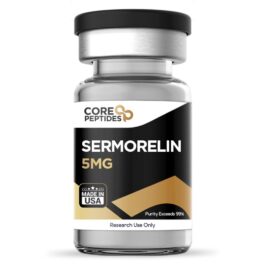
Sermorelin is a 29 amino acid peptide, the shortest synthetically developed peptide that may potentially induce biological activity at the receptors for the growth hormone-releasing hormone (GHRH).(2) Sermorelin polypeptide is an analog of the GHRH factor consisting of GHRH (1-29 acid)-amide. Due to this structural and functional mimicry, Sermorelin has been studied across multiple branches of scientific research involving growth hormone deficiency models.(3)
It was in the early 1980s that the action of Sermorelin, classified as a growth hormone-releasing fragment GHRF (1-29) amide, was first explored. Several research studies were conducted on rats where exogenous GHRF (1-29) amide was introduced in conscious and anesthetized rats. It was observed that the presence of GHRF appeared to stimulate the pituitary gland and promote growth. Following this theory, Sermorelin and similar compounds have become the subject of further research in growth hormone deficiency models.(4)
Overview
Sermorelin is suggested to be a growth hormone analog constituting the first 29 amino acids out of the usual 44 amino acids found in growth hormone-releasing hormone (GHRH). Researchers posit that Sermorelin binds with the GHRH receptors found on the pituitary gland and suggest further that the synthetic peptide may stimulate secretion of growth hormone (hGH). Thus, Sermorelin is believed to maintain the fundamental function of GHRH, possibly stimulating the GHRH receptors in the pituitary gland and leading to sporadic release of growth hormone despite its reduced amino acid sequence. This mechanism is thought to result in increased levels of insulin-like growth factor-1 (IGF-1), primarily recognized for its role in the anabolic actions of growth hormone. The estimated half-life of Sermorelin is around 11 to 12 minutes.
A major potential advantage of the peptide is that due to its apparent GHRH receptor specificity, it may not induce any significant change in the levels of other endocrine markers such as prolactin, insulin, cortisol, glucose, or thyroid hormones.(6)
Chemical Makeup
Molecular Formula: C149H246N44O42S
Molecular Weight: 3357.93 g/mol
Other Known Titles: GRF 1-29

| Vial Size | 5MG, 10MG |
|---|
Be the first to review “Sermorelin”
Related products
Core Peptides
Core Peptides
Core Peptides
Core Peptides
Core Peptides
Core Peptides
Core Peptides
Core Peptides
Reviews
There are no reviews yet.